NPR: Tiny Desk Concerts
(2024 • 5 Weeks)
Team
Bharathi Kiran Sonea, Ethan Allwood, Maxwell Chen, Jeff Orsino
Role
UX/UI Design + Research

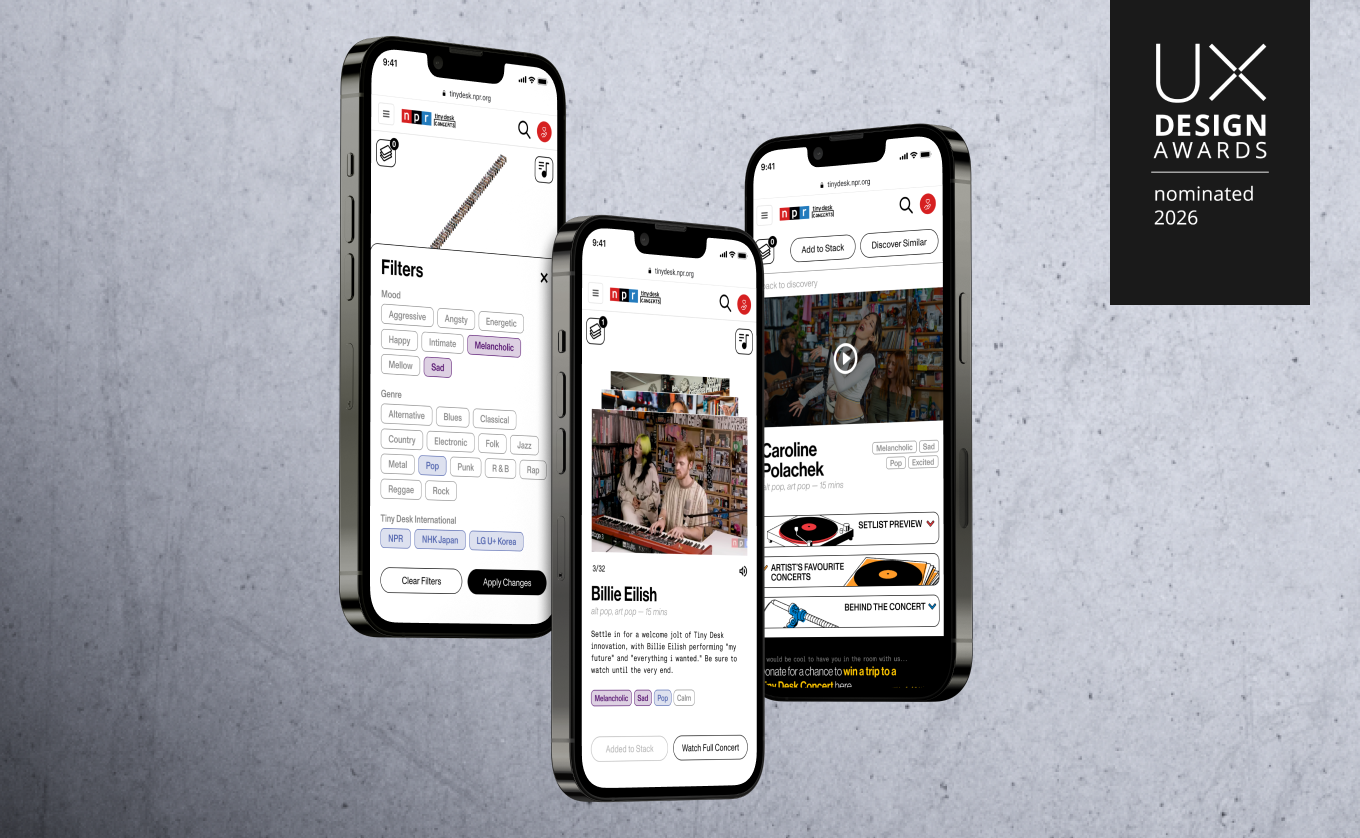
Creating a more informed public and providing authentic listening experiences.
NPR is an independent, nonprofit media organization dedicated to creating a more informed public. Each day, NPR connects with millions of listeners on air, online, and in person — exploring news, ideas, and what it means to be human.
↳ the client.
Tiny Desk Concerts
Tiny Desk Concerts is a video series by NPR Music featuring live performances filmed at NPR’s headquarters. Its mission is to expose audiences to new and emerging artists through authentic, unfiltered performances.
A Unique Listening Experience
Unlike traditional live sessions, Tiny Desk Concerts offers an intimate and raw experience that transforms familiar songs into something entirely new. Its cozy office setting and stripped-down sound distinguish it from other performance platforms.
Challenges in Music Discovery
While Tiny Desk’s vast archive celebrates musical diversity, its large and uncurated catalogue on YouTube and NPR’s website makes it difficult for listeners to discover new artists. Fans often realize much later that their favorite musicians have performed at Tiny Desk.
Key insight from secondary research:
“If we can turn people on to someone they’ve never heard, that’s always been — in my 35 years at NPR — that has totally been my goal.”
— Bob Boilen, creator of NPR Tiny Desk Concert
"How might we create an engaging experience for listeners in order to more easily explore the expansive Tiny Desk catalogue and learn more about those artists."
↳ framing the problem to design an appropriate solution.
↳ our solution.
Enhancing the discovery of new music
We propose an integrated platform within NPR Music that enhances discovery by connecting fans to unseen or forgotten performances. By linking NPR’s rich music journalism with interactive exploration, the platform encourages deeper engagement beyond traditional broadcasting formats.

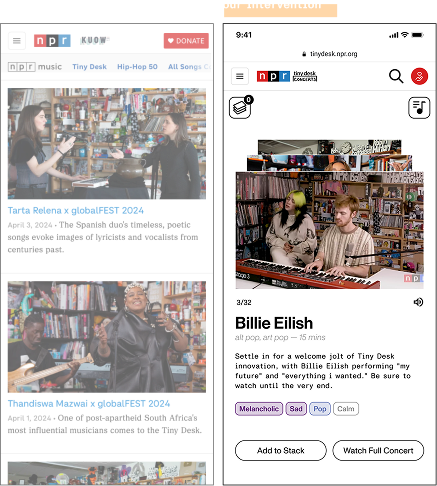
Current interface for Tiny Desk Concerts (left) displaying the performances in a static list, while our proposed design (right) provides more interactivity and options to discover new sounds.
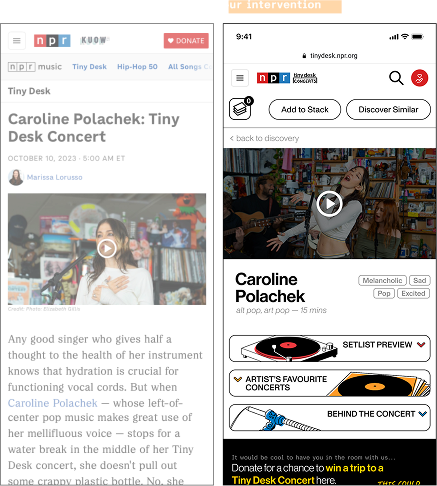
Concert pages currently only have either an image or video of the performance, accompanied by a few paragraphs describing the performance (left). Our proposed interface (right) provides a quick scan through of the concert and options for a detailed review.
Entry through the website
With most of NPR’s user traffic going through YouTube, users entering directly from the NPR website will go through a separate onboarding process, prompting them to choose filters of what they want to look for before entering the discovery page.
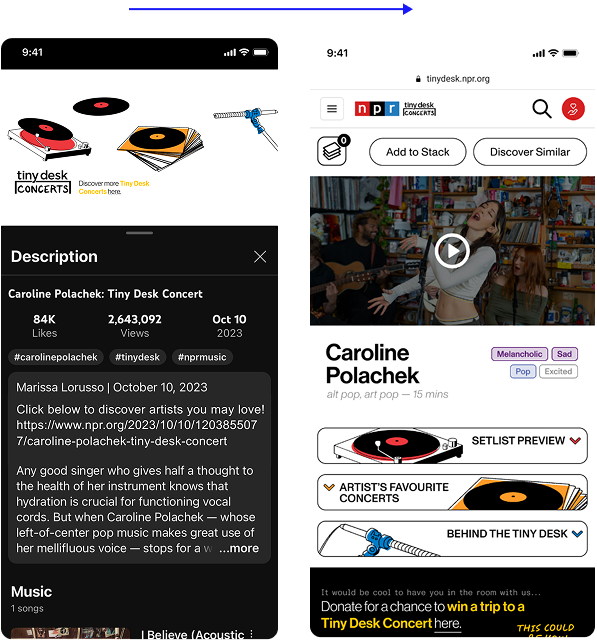
Driving YouTube traffic to NPR through a mobile-first design
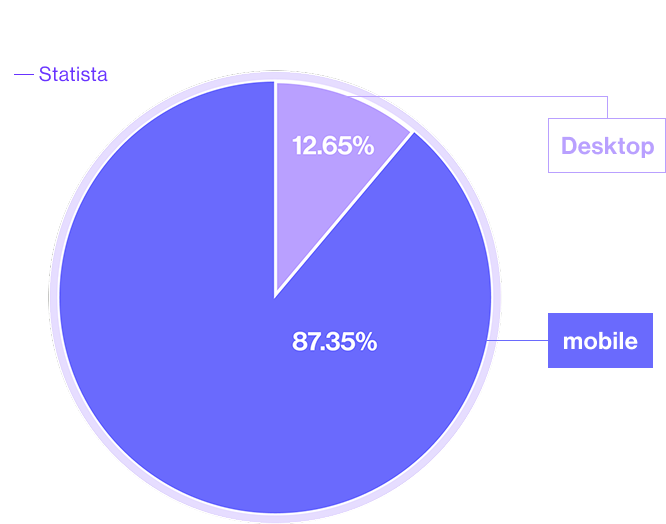
We decided on a mobile-first design because we found that a majority of YouTube users watch videos on their phones, with Tiny desk having over 3 billion views from their YouTube channel. Aiming to leverage viewer traffic from YouTube, and directing them to NPR’s website.
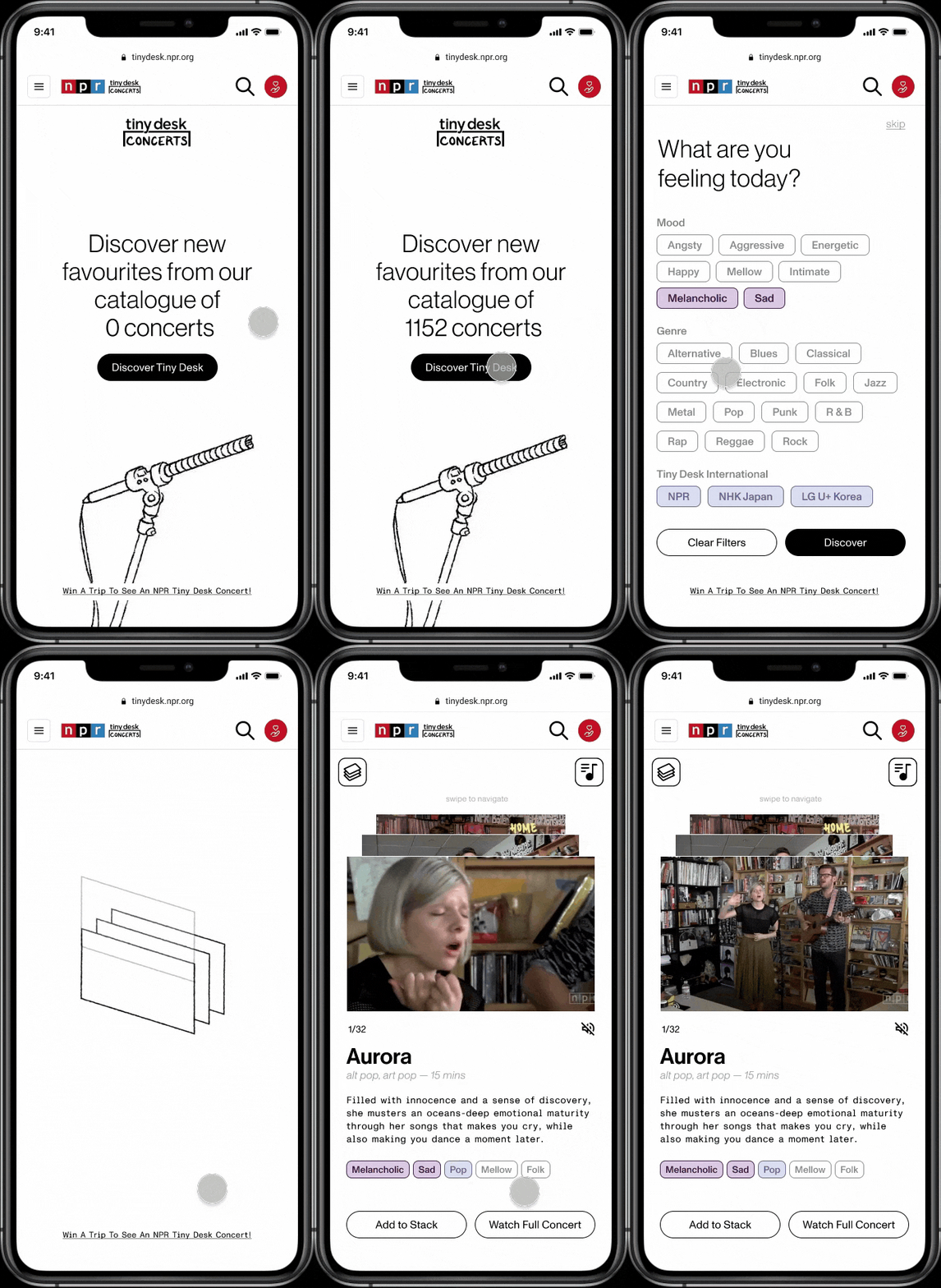
Entry through the website
With most of NPR’s user traffic going through YouTube, users entering directly from the NPR website will go through a separate onboarding process, prompting them to choose filters of what they want to look for before entering the discovery page.
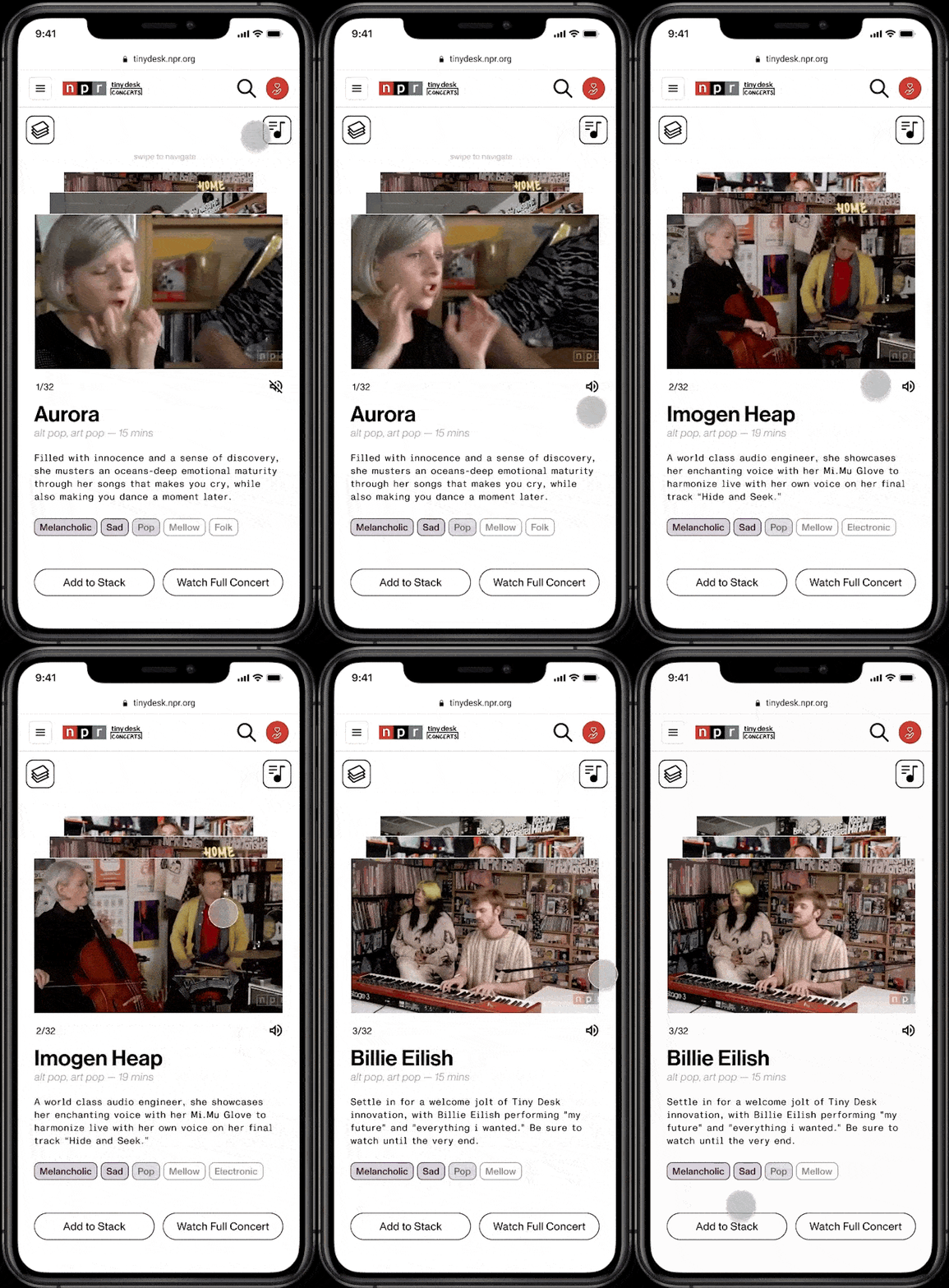
Bridging the physical experience
As a video series that is so strongly linked to the physical space of NPR, we wanted to create a digital experience that would not only be memorable but also relate it to physical experiences of searching for music by crate digging for vinyl.
This inspiration became the key interaction of our solution, assisting listeners in scrolling through the Tiny Desk Concert collections in a fun and memorable way that is grounded on a physical experience — connecting our physical mental model of the interaction into a digital experience.
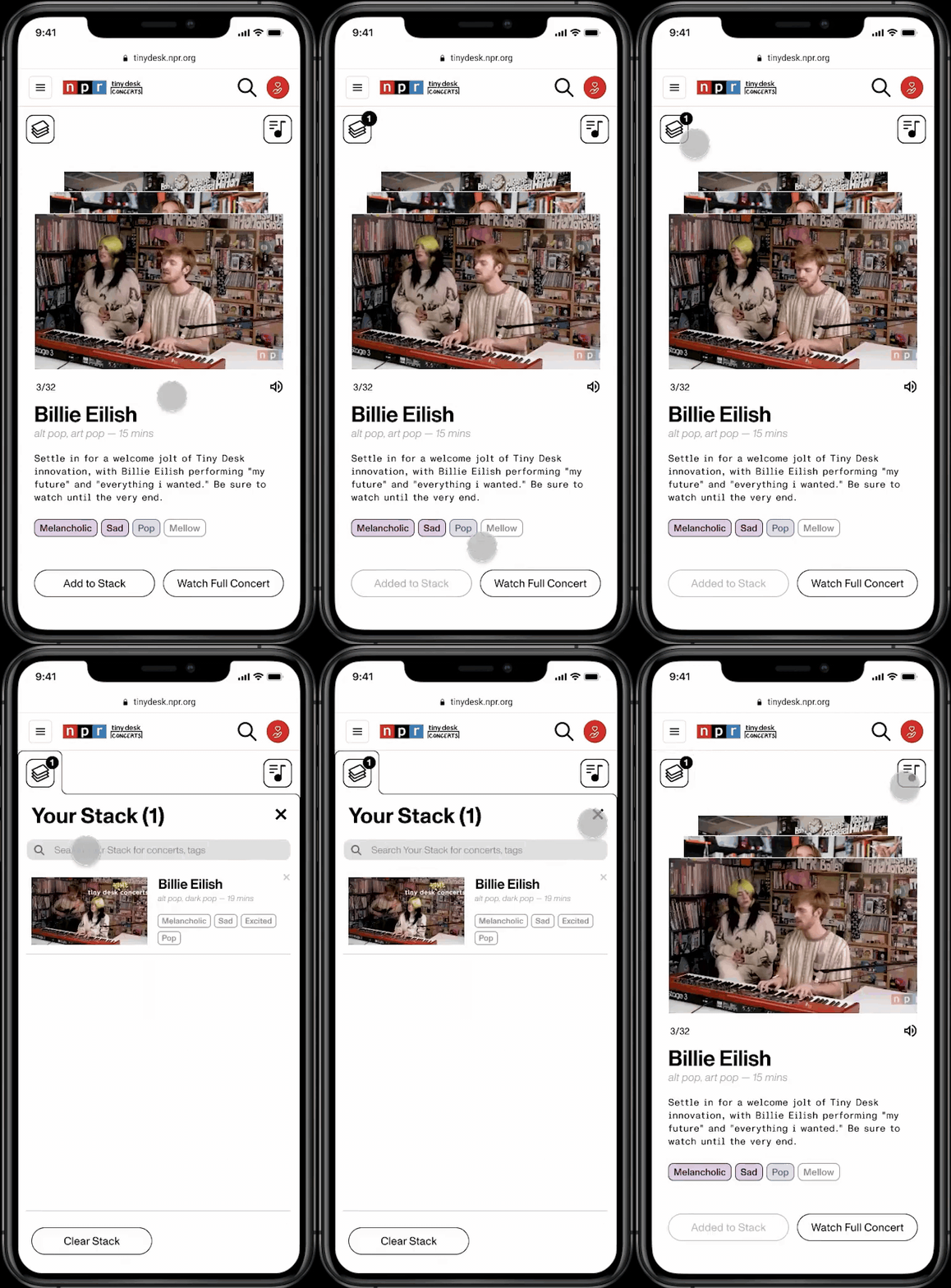
Saving concerts to the "Stack"
Using the experience of crate digging as a physical metaphor, we adopted the idea of piling stacks of vinyl into how concert videos could be saved to be watched later.

Discovery through the artist page
The artist page unpacks details tailored to each artist in sections. It extends the discovery experience of the listener by allowing them to continuously discover similar talents as well as explore the artist beyond the platform through Spotify and the NPR website.
1. Setlist Preview
The setlist preview gives a peak into artists’ studio version with access to Spotify.

2. Artist’s Favourite Concerts
Considering that you might’ve enjoyed the style of an artist, exploring their favourites is an opportunity to discover and potentially enjoy other moods and genres.

3. Behind the Concert
“Beyond the concert” is a way to discover more about the artist, and what makes their performance unique. From there, listeners can either explore exclusive interviews about the artist on NPR or continue discovering by clicking “Discover similar”.

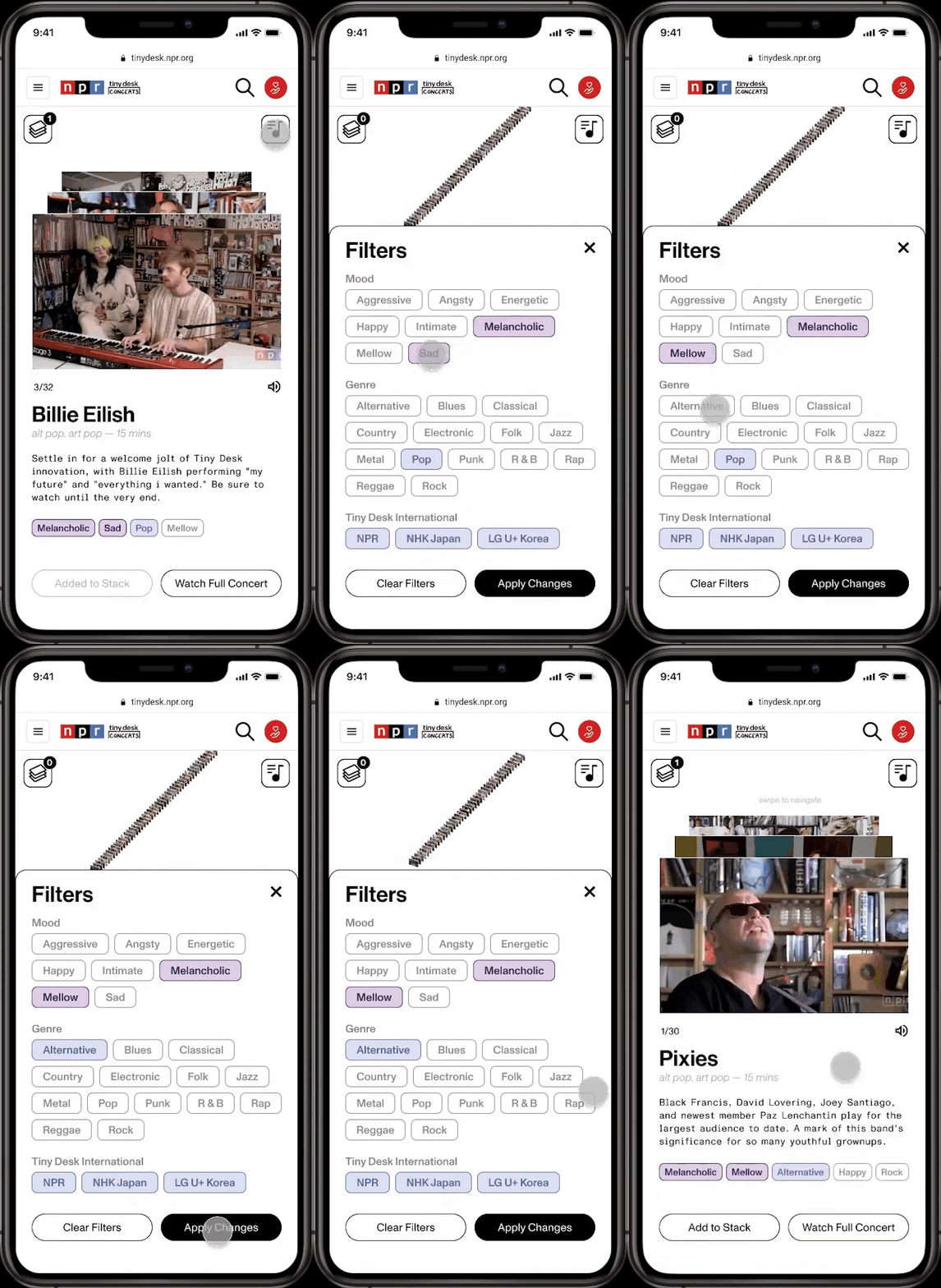
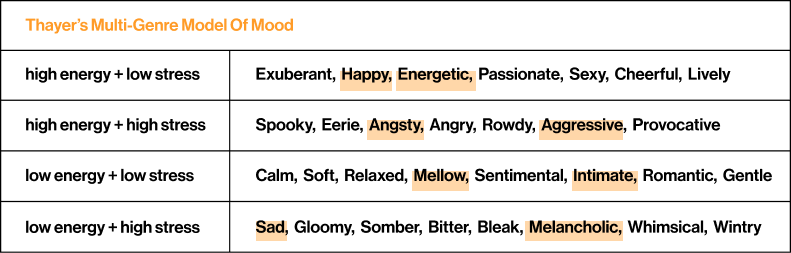
Classifying music by mood
The artist page unpacks details tailored to each artist in sections. It extends the discovery experience of the listener by allowing them to continuously discover similar talents as well as explore the artist beyond the platform through Spotify and the NPR website. Classifying music by mood provides an easier and more effective way to categorize tiny desk concerts with many artists not falling within distinct genres. Our research also showed that many listeners already classify what they listen to by the mood and feeling of the song.
Since starting her music career in 2007, Tinashe has created songs in genres spanning from pop to electro-R&B. And as the Aquarius said herself, "at this point, I've really demonstrated that I don't necessarily fit into one genre."
— Tinashe, artist interview from Tiny Desk Concerts
Filling the gaps using genre as a secondary navigation
Sorting by genre is more relatable for the listeners, if they chose to explore those artists beyond their tiny desk performances.

Tailoring Tiny Desk to an international audience
Tiny Desk Korea and Japan are recent collaborations aiming to expand the possibilities of tiny desk. Considering localisation, language and other unique cultural factors further reinforces Tiny Desk’s dream of introducing listeners to new music.
↳ final art direction.
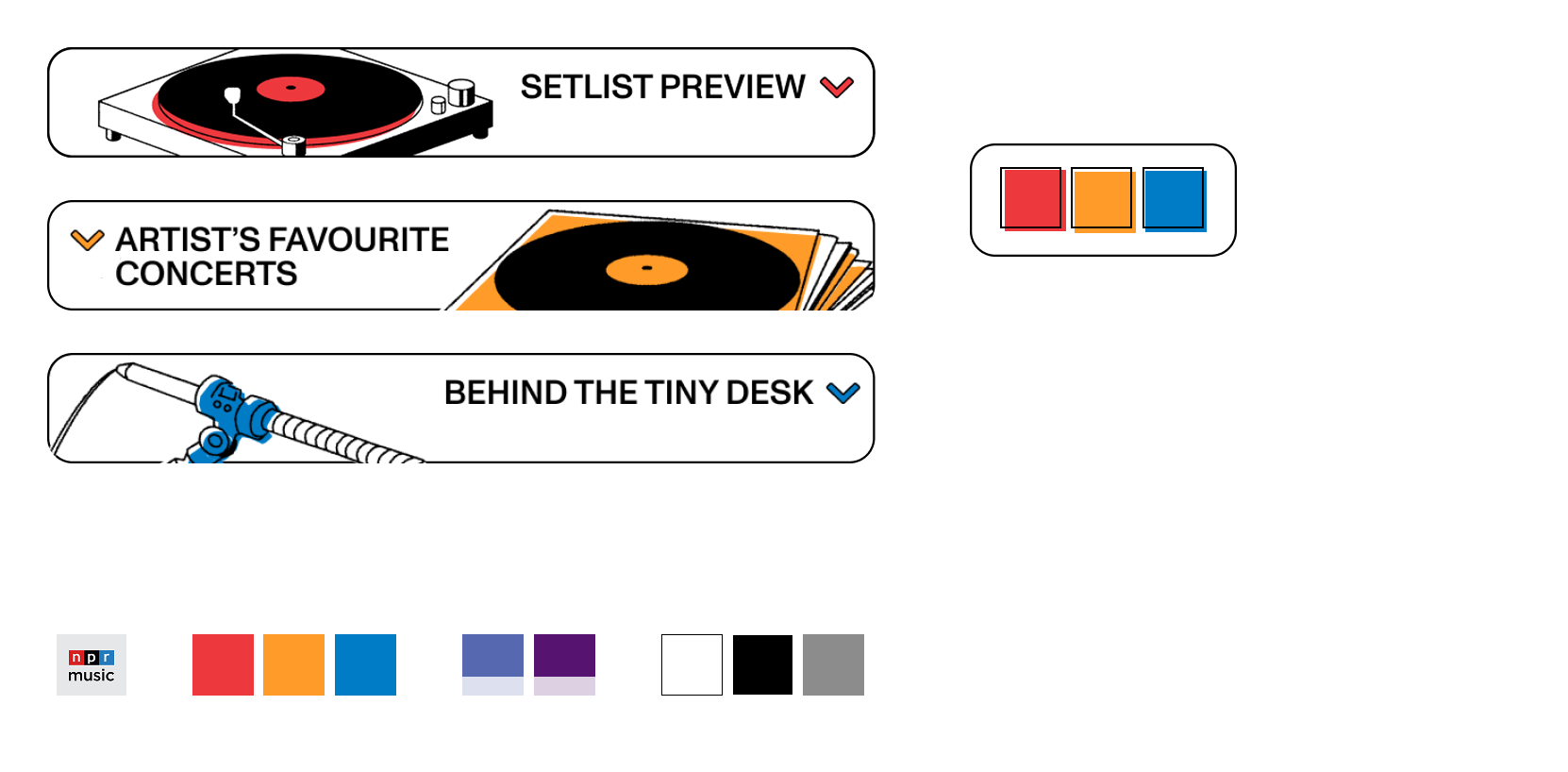
Reinforcing Tiny Desk Concerts’ raw and unfiltered setting with hand-drawn illustrations + imperfect color application.
Our art direction adopts colours currently used through NPR adding a third colour to the palette. Inspiration for its application comes from the physical printing process and the misregistration of colour. This application adds visual interest and depth to the illustrations while also extending the essence of Tiny Desk Concerts into the visual identity, highlighting the imperfect and live setting of the concert.
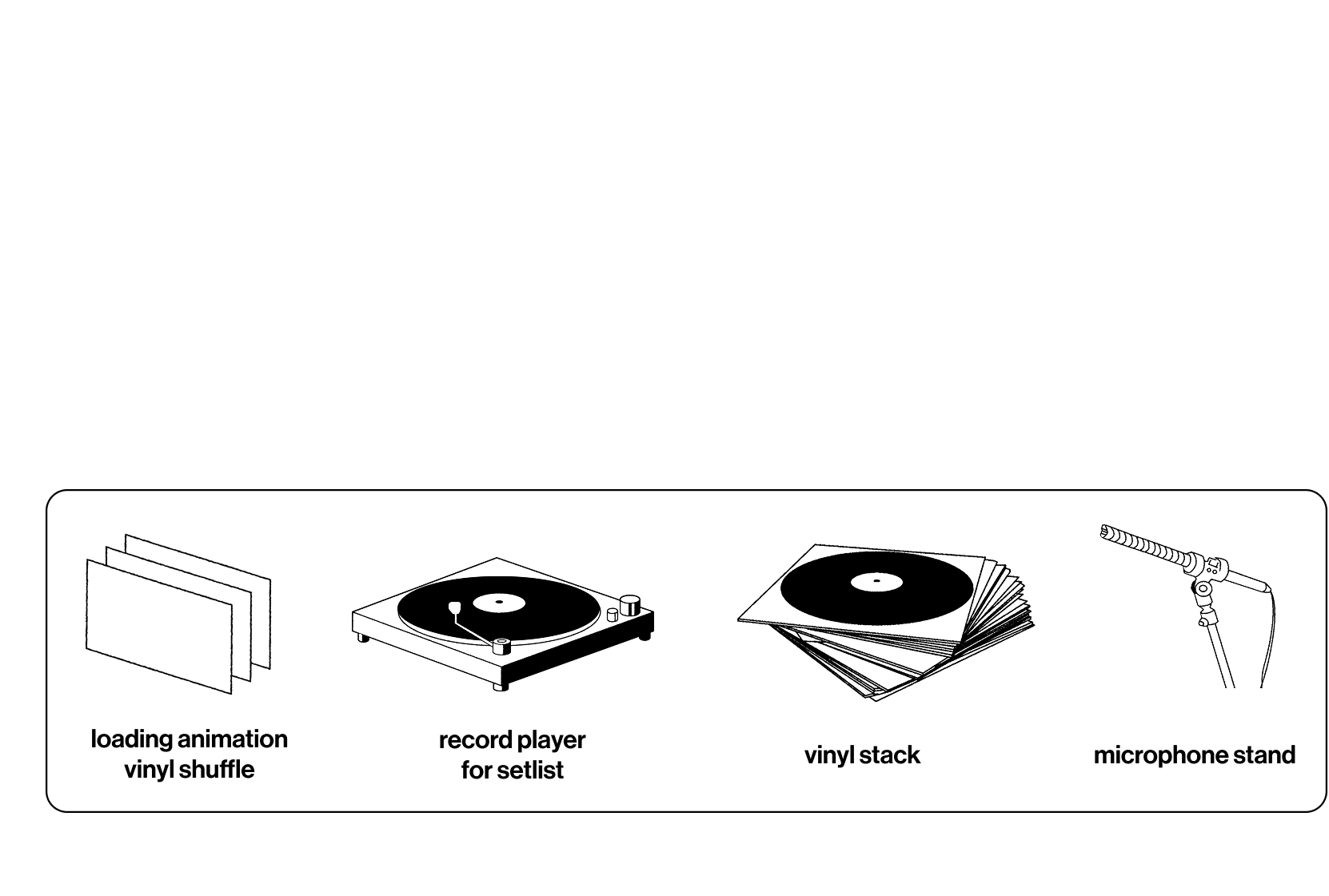
Our two type faces were chosen for their legibility at different fonts and sizes for both mobile and desktop. The illustrations we created are adapted from Tiny Desks current art direction and use of their microphone, creating new illustrations that would be paired with the content we are creating in our intervention. The illustrations also treated to look more rough and hand drawn to reinforce and lean into the current branding of NPR Tiny Desk.
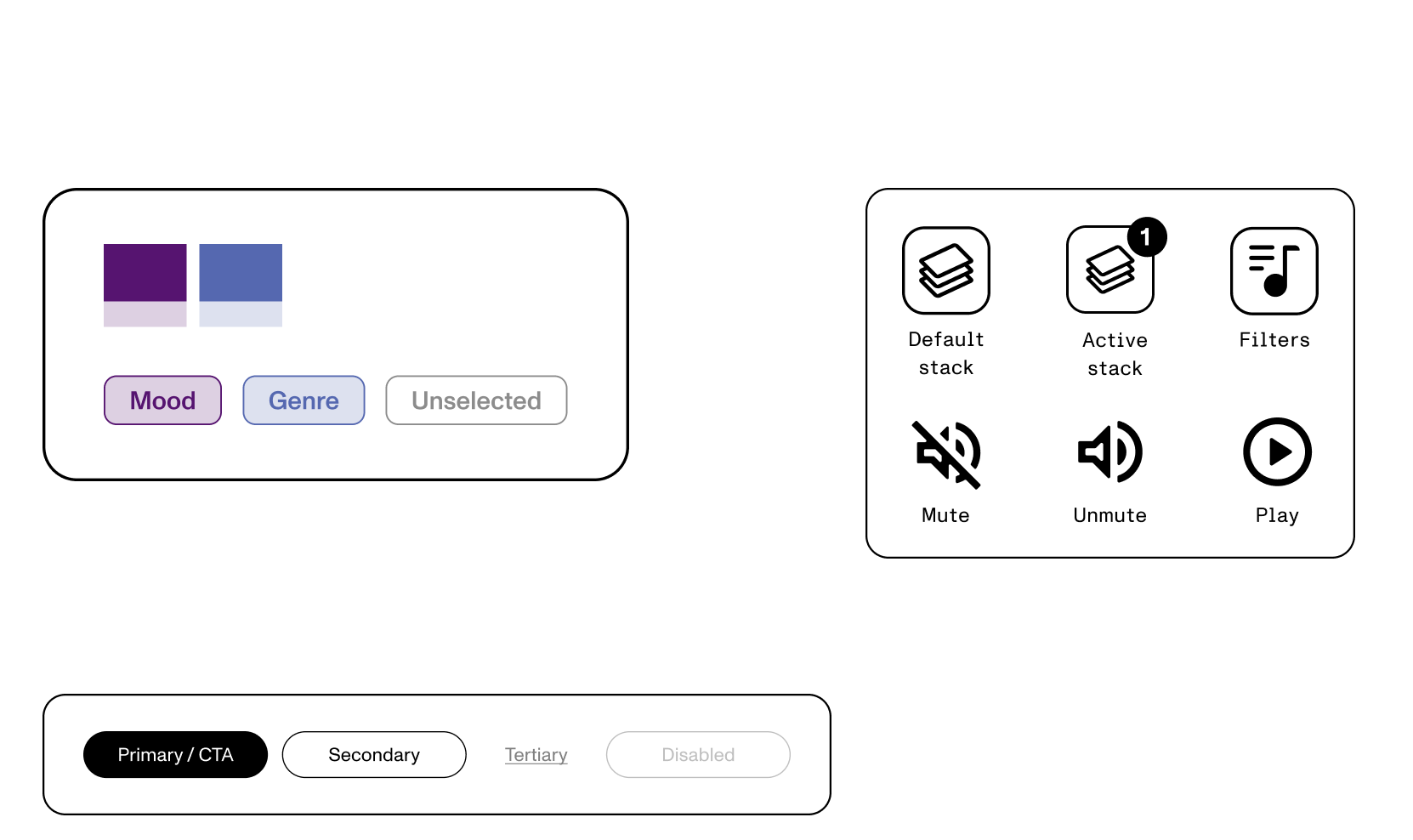
For our design system, the selected filter tags are styled in the 2 accent colors to separate them from other interactive elements and unselected tags. Mood is highlighted in purple as that is our primary method of filtering. We designed our own symbols for the stack and filters to reflect its physical form or affordance, which fits the more straightforward feel of Tiny Desk.
↳ value creation for NPR and Tiny Desk Concert artists + listeners.
Helping users discover new music
With Bob Boilen’s goal in mind, value is created for NPR Tiny Desk because the intervention creates a better environment for music discovery. By extension, the platform is also valuable for the Tiny Desk listeners who can continuously discover music by mood, genre, or through artists that they already know and like.
Reinforcing authenticity through a new visual identity
By designing a new visual identity for Tiny Desk Concerts, we are able to reinforce the more authentic and intimate nature of their branding outside of the live concerts and in the NPR broadcasting website itself.
Opportunities to create donation incentives
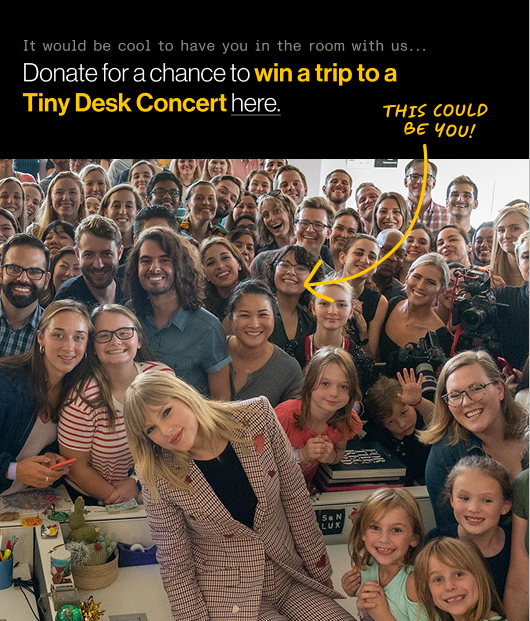
The opportunity to donate to join the audience extends the listeners’ intimate digital experience into the physical space and can generate funding to support the non-profit.
This project taught me the fundamentals of experience design and the significance of finding the right balance of designing for the stakeholders - both the intended users and the client. The intensive week of experience design research gave me a new perspective in the business aspect of design, and how value can be provided for the business while still maintaining a quality experience for users of the product.
Through this project I was able to apply previously learned skills such as design research practices and user-centric design to create a solution that is appropriate for the client, while also providing value for users through an immersive experience that aids them with their needs within the app.
My main takeaway from this case study would be the ability to rationalize my design decisions in terms of value being provided to the client versus the necessity needed for a solution to be created. Through the team's multiple design iterations, we were constantly faced with questions on whether certain designs are necessary and if they provided enough value for both the client and the users.
Overall, this project was another breakthrough for myself as a designer. I was able to learn the importance of key aspects in design: the viability of an idea and how it creates value for the business (client), the desirability of the product and how it creates value for users (consumers) based on their needs, and the feasibility of the product based on the technical aspects and its functionalities.
↳ reflection.
